Friday, November 17, 2023

NASCAR’s Unique and Forgotten Racing Divisions: Introduction


On December 14th 1947, a meeting inside Daytona Beach’s Streamline Hotel would formally establish the basis of what we know as NASCAR was formally established as a motorsport sanctioning body. It would be absurd to believe that Bill France Sr. and the other members of the gathering would fully fathom the greatness their creation would achieve over the period of over 75 years. As the technology, the athleticism of drivers and crews and finances were difficult to predict from the beginning, the journey to what NASCAR is in 2023 involved in a number of interesting tangents. 

Originally assembled with a Modified division and later the Strictly Stock series (evolving into what now is the current Cup Series), NASCAR rapidly expanded their reach with a slew of stock car series for regional as well as national racing. The opening decades of NASCAR also involved experiments into many unusual forms of auto racing competition; Some of those featured  stock car auto racing. 


In honour of three-quarters of a century being a North American motorsport staple, an opportunity arises to recognize of the more fascinating forms of racing that were held under the NASCAR banner. I originally intended for this to be a single article or post but my research on the past NASCAR divisions has proven way too interesting. Finding so many intriguing tidbits, it was impossible to maintain my original vision for this article. Instead of a single article highlighting six divisions in a brief fashion, I have decided to post individual articles about each one of the unique past track spectacles that were staged under the famous motorsport sanctioning body.  

Please click on the division titles to access article:

NASCAR’s Unique and Forgotten Racing Divisions: Baby Grand National/Goody’s Dash Series


Robert Huffman Hero Card with White House Apple Juice Pontiac Sunfire


Years of Competition: 1975-2003

Notable Drivers: Dean Combs, Michael Waltrip, Davey Allison, Larry Caudill, Robert Huffman


As was many gasoline dependent industries during the 1970s, the 1973 oil crisis caused a deep impact to NASCAR. One of the most notable consequences of the situation was the 1974 Daytona 500 being cut by 50 miles. In the crisis, NASCAR explored a new racing tour tailored to the rapidly growing interest in the compact car sector in the United States. The solution presented itself in the form of the Baby Grand National Racing Association (BGNRA) that was assembled in June 26, 1973 with NASCAR adopting the series in April of 1975.

The race vehicles featured in the series were based on domestic and foreign production cars with single overhead cam four-cylinder engines. The Chevrolet Vega, Mercury Capri and Ford Pinto proved popular during the opening season. Other cars converted to compete in the early years of the Baby Grand National series included the Dodge Colt, Ford Mustang II and Opel Kadett. In the 1975 Jaycee 320 held at North Wilkesboro Speedway, a 1973 Saab was driven by Kenny Lindell finishing 13th place in the 38-car field.


Image from Program for 1975 Jaycee 320 Baby Grand Auto Race Program of #121 Larry Caudill and #21 Larry Pearson in Mercury Capris 


Car counts were robust for many of the NASCAR Baby Grand National Series in the first year with a healthy dose of young competitors. Larry Pearson, son of Cup Series champion David Pearson, was an early draw. Other drivers such as Larry Caudill and Dean Combs would build long reputations in the series right from its inception. 23-year-old Combs won the first championship in Baby Grand Nationals and went on to take the title in the next two years as well. Combs’ would finish as the winner for a record 60 races in the series competing between 1975 and 2002. 

Focused in short tracks during its inaugural season, excursions to larger tracks such as the 1.017-mile North Carolina Motor Speedway (Rockingham) and the 1.5-mile Charlotte Motor Speedway were also undertaken. In 1979, the prominence of the Baby Grand National series grew when the opening round was held on the prestigious Daytona International Speedway. Mike Watts won the 100-mile event christening what would be a regular annual show for compact cars during Speed Week. Larry Hoopaugh won the Daytona race three consecutive times from 1980 to 1982. Mike Swain Sr captured the most total victories for a series driver at Daytona with four.

Though American automakers were prominent in the Baby Grand National series in much the same fashion as other NASCAR divisions, the prevalence of compact cars offered a legitimate opportunity for European and Japanese manufacturers to regularly compete. In 1977, George Thompkins won a race at Champion Speedway driving a Datsun becoming one of the earlier occasions a Japanese auto brand won an NASCAR sanctioned race.

NASCAR would change the name of the division to International Sedan in 1980. Dean Combs earned two more championships in 1980 and 1981 piloting a Datsun 200SX. Datsun/Nissan’s presence in the series faded shortly after Combs’ success with General Motors products taking a firm hold of competition. Through the 1980s and 1990s, most successful competitors selected the Pontiac Sunbird and later Sunfire. Called the Darlington Dash Series in 1983 and 1984, Daytona Dash Series as well as Charlotte/Daytona Dash Series were used through 1985 to 1989.


Larry Caudill Hero Card with Pontiac J2000 Race Car


Michael Waltrip, long-competing Cup Series driver and brother to NASCAR Cup three-time champion Darrell Waltrip, claimed the 1983 title for the division that adopted the use of the Dash Series for the first time that season. Another member of a renowned racing family, Davey Allison ran a handful of Dash Series events in his formative years as he would ascend to the Cup Series. The son of NASCAR legend Bobby Allison had a series-high finish of 3rd place at the 200-mile race at Daytona in February of 1984. Winner of the 1986 NASCAR Dash Series championship, Hut Stricklin would join Michael Waltrip and Davey Allison in becoming a Cup Series regular. In addition to the Waltrip and Allison names being heard at some point during the series history was the Earnhardt name. Kerry Earnhardt, the eldest son of seven-time NASCAR Cup Series champion Dale Earnhardt, campaigned a #3 Chevrolet Cavalier through the 1993 season finishing eight times in the top ten over 11 race starts. 

During the 1980s, the NASCAR Dash Series served as the stage for some historical moments for women in motorsports. From Yorktown Heights, New York, racer Karen Schulz’s performance in her freshman year of the Charlotte/Daytona Dash Series earned Rookie of the Year recognition. In the opening event for the 1988 season for the series, the Florida 200 at Daytona International Speedway finished with Schulz in 2nd place and series newcomer Shawna Robinson in 3rd place. In June of 1988, Robinson would be the first woman to win an NASCAR touring event when he won a 100-mile race at New Asheville Speedway and went on to claim the Charlotte/Daytona Dash Series Rookie of the Year in her season-long performance.

For 1992, Goody’s Headache Powder became the title sponsor for the Dash Series and carried their commitment through to the conclusion of the racing division. Following the gain of the title sponsor, the tour regularly received television coverage with a number of events airing on ESPN. Thanks to the increased television coverage of the series, one of the most bizarre crashes at Daytona was captured on film. In the 1994 Florida 200, Dave Stacy’s Ford Probe spun on the backstretch caught up in a multi-car accident. The car carried its momentum before hitting an embankment that launched Stacy into Lake Lloyd. Despite his damaged race car being partly submerged in the lake, Stacy was unharmed after the incident. In 1997, the one and only father/son championship duo was cemented in 1997 when Mike Swaim Jr won the title 12 years after his father claimed back-to-back season-ending trophies.


Robert Huffman's Toyota Celica 2002 Goody's Dash Car (Toyota Motorsports) 


A series centered on four-cylinder power, the NASCAR Goody’s Dash Series would shake up the performance potential of the 100-inch wheelbase race cars for the 1998 season. In addition to the existing 191 cubic-inch four-cylinder engine, a 268 cubic inch V-6 engine option. Four-cylinder Goody’s Dash Series were allowed to run 100 pounds less weight but the six-cylinder engine proved to be rapidly popular.

In 2000, Toyota Racing Development used the Goody’s Dash Series as a first step into NASCAR for what would become their eventual climb to the Cup Series in 2007. The Toyota Celica debuted with Eric Van Cleef in 2000 before the manufacturer expanded their effort by luring reigning series champion Robert Huffman the following year. Cam Strader won the 2001 Goody’s Dash title piloting a Mercury Cougar while Jake Hobwood took the 2002 crown in a Pontiac Sunfire. 

Final season of the NASCAR Goody’s Dash Series occurred in 2003 with an eight-race schedule that wrapped with a 150-lap event on the infield oval at Atlanta Motor Speedway. Justin Hobgood won the final event while Robert Huffman grabbed a series-tying fifth championship (an honour shared with Dean Combs) before joining the Craftsman Truck Series the following year. Huffman’s championship was also the first for a Toyota Racing Development driver in NASCAR.

Instead of completely fading out, the Dash Series would survive one more season reverting back to its non-NASCAR sanctioned roots. An organization called IPOWER (International Participants of Winning Edge Racing) revived the competition format in 2004 featuring the same compact race cars and several drivers from the former series. The IPOWER Dash Series ran for one season before it transitioned into the ISCARS Dash Touring Series that operated with support from ASA (American Speed Association). 


References:

NASCAR

Women in Racing by Michael Benson

https://www.thethirdturn.com/wiki/NASCAR_Dash_Series_Central

Ultimateracinghistory.com


NASCAR’s Unique and Forgotten Racing Divisions: Speedway Division

1952 Photo of Buck Baker and his #87 Penny Mullis Cadillac Special (ISC Archives/NASCAR Media)


Years of Competition: 1952-1953 

Notable Drivers: Buck Baker, Jack Smith, Ralph Liguori

Staging competition on race tracks, NASCAR was competing in a battle of its own at the points of its formation. Holding motorsport events since 1902, AAA (American Automobile Association) possessed a prestigious position of sanctioning many popular auto racing events in United States until 1955 from cross-country runs to closed circuit events for open wheel roadsters and stock cars. The crown jewel of AAA’s influence in motor racing competition was their role with the Indianapolis 500.  

Announced November 10th of 1951, the NASCAR Speedway Division was described in the 1953 NASCAR Record Book as a response to competitors “who wished to test their skills in the big cars”. Although NASCAR’s history is rich with competition among modified category vehicles (a race car type that could be described as open wheel), the Speedway Division featured machines using older Indianapolis-style race car chassis with some boasting past Indianapolis 500 linage. Speedway cars were powered by production car-based engines to keep the sport more economical. Cadillac, Ford, Mercury, Hudson and GMC truck engines were among the powerplants installed in the vehicles.

The auto racing public got their first taste of the NASCAR Speedway Division at Daytona Beach in February of 1952. Part of the year’s Speed Week program, Speedway vehicles competed in one-mile runs down the beach course. At the end of three days of runs, Buck Baker took the $1,000 grand prize prevailing in the showdown on February 8th. Baker’s 140.41-miles per hour average speed in his Cadillac-propelled Wetteroth beat Fireball Roberts who drove a Ford-powered machine. 


Image from NASCAR Program of Speedway Cars at 1952 Daytona Beach Speed Week


The first proper race for the 1952 NASCAR Speedway Division took place at Darlington Raceway. In the 200-mile event consisting of 19 cars and resulting in 15 lead changes, Buck Baker won the contest with a four-lap lead. The Darlington Raceway event would be the only paved oval event during the 1952 campaign. While the Indianapolis-style cars attracted crowds throughout the 1952 Speedway Division campaign, the fields were comparatively smaller to the stock car racing tours.

A total of seven races made up the inaugural season for the series with Buck Baker carrying on early momentum to take the year’s title. The Speedway Division provided crucial success for the young Baker who was still chasing a first victory in NASCAR’s Modified or Grand National series prior to 1952. Going on to named to being one of NASCAR’s 50th Greatest Drivers in 1998 (alongside his Daytona 500-winning son Buddy), Buck Baker’s career including two championship in what is currently the Cup Series.


Image from NASCAR Program of Sam Waldrop and his Hudson Special at 1952 Daytona Beach Speed Week 


Although the first year of the NASCAR Speedway Division appeared to show some promise, a number of issues almost immediately started to cripple the tour. The 1952 season was cut short due to a steel strike as well as an extremely hot summer that cancelled races past June. The NASCAR Speedway Division returned for the 1953 season but the future prospects for the tour was threatened. Not including a second visit to Daytona Speed Week where Buck Baker defended his speed trial win, only four events would be held for the tour.

Sprint car driver Pete Allen won the 1953 Speedway Division championship by a three-point margin. Runner-up in the points standing was Ralph Liguori, prolific driver with an astonishingly long racing career that included competition in multiple USAC divisions and would retire in 2008 at the age of 70. Allen also won what turned out to be the final race at Champion Speedway located in Fayetteville, North Carolina.

While the Speedway Division concluded operations, NASCAR to continue to explore the territory of AAA/USAC competition with the Midget series starting in 1953.


References:

NASCAR

Rumblin Ragtops: The History of NASCAR's Fabulous Convertible Division by Greg Fielden

The Evolution of NASCAR: A Historical Collection by Deb Williams

When NASCAR Started Their Own Indy Car Series: The Speedway Division

www.ultimateracinghistory.com

NASCAR’s Unique and Forgotten Racing Divisions: Midget Series

Cover Image of NASCAR Midget and Amateur Auto Races Program by Ralph Liguori behind the wheel of midget car


Years of Competition: 1953-1968 (1953-1960 as National Series)

Notable Drivers: Nick Fornoro Sr., Fred Meeker, Jim Whitman, Mario Andretti


The Speedway Division wasn’t NASCAR’s only attempt to compete with the purpose-built open wheel racing series of AAA/USAC. Despite a relatively long run, the Midget series is among one of the lesser known and under-recorded competitions in NASCAR.

A form of motorsports that caught on during the 1930s, midget racing is based on small, simplistic vehicles running powerful engines. Midget racing was very popular following the second world war as it proved relatively affordable and the short-distance events could be easily staged at short ovals. Through the 1950s and 1960s, midgets ultimately served as a springboard for many great drivers. A short list of drivers who parlayed success in midget racing to become an Indianapolis 500 winner includes Bill Vukovich, Sam Hanks, Mario Andretti and A.J. Foyt. 


Image of partial Midget Division field from Program for 1958 NASCAR International Safety and Performance Trials and Races at Daytona Beach 


NASCAR’s Midget racing division was first assembled as a national tour in 1953 competing on a 16-race calender held on 11 tracks. Specifications for the race cars required a maximum weight of 1,100 pounds and wheelbase lengths between 68 and 74 inches. A choice of an Offenheuser (Offy) or a Ford V-8-60 flathead engines were offered with the midget machines. The startup of the Midget Division coincided with the decline and shuttering of NASCAR’s Speedway Division that was also based on Indianapolis-style roadsters. 

Fred Meeker won the first NASCAR Midget Division event at the 0.25-mile oval of Roosevelt Stadium. Meeker would remain competitive throughout the inaugural season but Nick Fornoro who won five races en route to the 1953 championship and a $175 cash prize. Meeker would claim two series titles of his own in 1955 and 1956. During the 1955, 1956 and 1957 seasons, separate midget point championship were awarded to the top Offy-powered entrant and the highest-placed Ford-propelled driver.

Images of 1956 NASCAR Champions. Midget Champion Fred Meeker in Middle between Modified Champion Red Farmer (Right) and Sportsman Champion Ralph Earnhardt (Right) (IMS Image and  Archives via Getty Images/NASCAR)


Operating in combination with NASCAR’s Daytona Beach Speed Week, a several races for the Midget division occurred at Daytona Beach’s 0.2-mile paved Memorial Stadium. A 25-lap race held on February 21st of 1964 on the small oval was won by future motorsport legend Mario Andretti driving an Offenhauser-powered Watson. Andretti’s victory came a year before his first USAC Championship Car crown (today recognized as the IndyCar championship) and three years before he would claim the Daytona 500.

NASCAR removed the Midget Division from their national tour program in 1960 though competition continued as a regional series. The last champion for NASCAR’s Midget tour was awarded in 1963 but historical accounts show that the stock car racing sanctioning body continued to support events up to 1968.

While NASCAR divested itself from midget racing in the 1960s, this form of motorsport greatly contributed to the emergence of several of the organization’s modern stock car legends Jeff Gordon and Tony Stewart as well as current drivers Kyle Larson and Christopher Bell. 


References:

NASCAR

Foyt Andretti Petty: America's Racing Trinity by Bones Bourcier

Ultimateracinghistory.com

NASCAR’s Unique and Forgotten Racing Divisions: National Convertible

1959 Daytona 500 Photo of Richard Petty with 1957 Oldsmobile Convertible (Photo Credit Pattie Petty/RacingOne Multimedia/NASCAR Media)

Years of Competition: 1955-1959

Notable Drivers: Don Oldenberg, Bob Welborn, Curtis Turner, Joe Weatherly, Fireball Roberts, Richard Petty


Convertibles have always proven to be alluring automobiles. During the 1950s, the Detroit Three automakers regularly incorporated a drop top body style on the same platform as their two-door hardtops. With convertibles offered with the same V8 engine options as those with coupes, it was only natural for stock car racers of the time to want to race them. The NASCAR Convertible division was for the time of the mid-to-late 1950s a hotly-contested battleground for roofless vehicles.

The foundation for the division was founded in 1955 but was originally not part of NASCAR. Originally founded under Indianapolis-based SAFE (Society of Autosports, Fellowship and Education), the convertibles initially raced as the All Star Circuit of Champions. Competitors were required to win at least five races in hard top events before being eligible to drive in a race-prepped convertible. Don Oldenberg claimed the first and only title for the SAFE All Star Circuit of Champions. By the end of 1955, NASCAR and SAFE agreed to a merger that saw the tour to become the NASCAR Convertible division for the new year. Oldenberg’s championship is historically recognized as part of NASCAR.

The first official NASCAR Convertible Division event was a 39-lap event at Daytona Beach on the beach and road course. Curtis Turner driving a 1956 Ford won the race by more than a lap ahead of Fireball Roberts. A busy 47-race schedule shaped the 1956 Convertible Division’s season that included a visit to Toronto’s Canadian National Exhibition Speedway (Don Oldenberg won the 150-lap race finishing ahead of future NASCAR Grand National champion Joe Weatherly). Turner stormed to victory in 22 races but the 1956 championship was  Bob Welborn driving a Chevrolet. Welborn would repeat as winner of the season-ending crown in 1957 for what was a 36-race tour. 


Bob Welborn #49 1957 Chevrolet running at Bowman Gray Stadium (Bowman Gray Archives/NASCAR Media) 


Following the tragic crash at the 1955 24 Hours of Le Mans, a group called the AMA(Automotive Manufacturers Association) consisting of the major car companies sought to cease open support for auto racing in the middle of 1957. NASCAR was justifiably concerned for the quality and quantity of fields for both the Convertible and the Grand National series. For 1958, an innovative “zipper top” (a removable steel top) could be run by competitors to allow them the same car to run in both major NASCAR divisions. Convertibles would often compete in Grand National races unaltered in a handful of events going back to 1956. 

The 19-race 1958 season for the NASCAR Convertible Division included Richard Petty’s first NASCAR outing at Columbia Speedway in South Carolina on July 12th (his proper Grand National/Cup debut took place in Toronto at the CNE Grounds on July 18th). The season ended with Bob Welborn as series champion for the third time taking eight race wins.

With the opening of the Daytona International Speedway in 1959, the NASCAR Convertible Division staged a 100-mile, 40-lap event. Shorty Rollins took the victory by two feet over Marvin Panch. A 1958 Edsel was among the 21-car field for the convertible event. A sizable number of convertibles also took part in the 59-car field that competed in the inaugural Daytona 500.


Joe Weatherly Drives #12 Ford Thunderbird Convertible in 1959 Firecracker 250 at Daytona International Speedway (NASCAR Media)


Hosting Grand National stars such as Lee Petty, Junior Johnson and Fireball Roberts, the NASCAR Convertible Division also served as a launch pad for many greats including Richard Petty, Ned Jarrett and Joe Weatherly who ran in the open-top series early before earning champions in what is now the NASCAR Cup Series. 1963 Daytona 500 winner Tiny Lund and Glen Wood (a founding member of the legendary Wood Brothers team that many drivers drove for including Lund) were also drivers in the NASCAR Convertible Division.

1959 was the last season for the NASCAR Convertible tour where Joe Lee Johnson took the final series crown. Although the series was popular with fans and competitors early on, decreased entries and lack of interest from promoters led to its demise. The Rebel 300 race at Darlington Raceway would run from 1960 to 1962 as the last convertible events but Grand National points were awarded.

With convertibles growing scarce through the 1970s ultimately ended any possible chance to revive NASCAR’s prominent open-top stock car division.


References:

NASCAR

Rumblin' Ragtops: The History of NASCAR's Fabulous Convertible Division by Greg Fielden

www.ultimateracinghistory.com

NASCAR’s Unique and Forgotten Racing Divisions: Grand Touring/Grand American Division


Years of Competition: 1968-1972

Notable Drivers: Tiny Lund, Darrell Waltrip, Richard Childress, Bobby Allison


Through the 75 years of NASCAR, many automotive trends have come and gone (some even return years later). In the mid-1960s, Ford unleashed a cultural phenomenon inside the American motoring world introducing the Mustang. The Ford Mustang spawned the pony car segment  as its inexpensive performance and practicality proved tempting for younger drivers. The SCCA (Sports Car Club of America) was immediately positioned to take advantage of a newly-formed rivalry formed between the Ford Mustang and Chevrolet Camaro by hosting the cars on track in the Trans-Am Series. 

Running shorter distance races to the NASCAR Grand National series, the Grand Touring Division was born in 1968 as a support event to the more prestigious tour; eventually reshaping the premier series with its talent and ideas. While the NASCAR Grand Touring served as a battleground between pony cars with the Ford Mustang, Chevrolet Camaro, AMC Javelin and the before-mentioned Mercury Cougar mainstay models in the 1968 field. Smaller capacity engines of 305 cubic inches or less differentiated the competition from the Grand National cars and allowed for a more assorted variety of race machines. Other vehicles taking part in Grand Touring races included Dodge Darts, Porsche 911s and an Austin Cooper Larry Newton drove in the 1968 Darlington 250 event. A Fiat participated in the 1969 Paul Revere 250 held on the Daytona road course while a pair of Alfa Romeos was part of a possible entry list but didn’t compete.

The opening year of the NASCAR Grand Touring division featured a heavy-hitting charge from legend team owner Bud Moore. In 1967, Bud Moore Engineering had been campaigning Mercury Cougars in the SCCA Trans Am series but was had support cut off as Ford Motor Company at the end of the year fearing the team was cannibalizing the auto manufacturer’s efforts showcasing the Mustang. Moore’s race-ready Cougars quickly found a new home in the early years of the new NASCAR series.

Tiny Lund won the first Grand Touring Division title with Bud Moore’s Mercury and would settle into becoming a series superstar capturing the champion again in 1970 as well as 1971. Buck Baker, acclaimed road racer Peter Gregg, Donnie Allison and country singer Marty Robbins were notable competitors during the first season. For the 1969 season, 22-year-old Kentucky native Darrell Waltrip would make a handful of starts in Grand Touring. Though Waltrip would have limited success in the series, he would go on to become a stock car legend with three NASCAR Cup series championships. Hall of Fame car owner Richard Childress compiled some of his earliest NASCAR experience racing in the Grand Touring. Childress’ best result was a 3rd place finish in the 1970 Casey 200 at the 0.5-mile dirt track on the North Carolina State Fairgrounds. 


Future NASCAR Cup Series Car Owner Richard Childress Inside Chevrolet Camaro for NASCAR Grand American Competition (ISC Archives/NASCAR) 


The Grand Touring Division would compete at the Daytona International Speedway since its inception, the series races were staged on the road course. The Paul Revere 250 took place on July 4th of 1968 with Lloyd Ruby taking the win. A second Daytona road race for the Grand Touring division would be added the following year during Speed Weeks festivities named the Citrus 250. 

In addition to featuring a handful of foreign vehicles, Grand Touring also welcomed drivers from outside of the United States. Japanese driver Seiichi Suzuki made three starts in the series at the Daytona International Speedway with a best finish of 4th place coming in 1969 in a Bud Moore prepped Mercury.

Although the Daytona International Speedway’s 2.5-mile oval was off limits to the Grand Touring cars, they would be instrumental in NASCAR’s christening of the all-new 2.66-mile Alabama International Motor Speedway (known today as Talladega Superspeedway). The 151-lap NASCAR Grand Touring race called the ‘Bama 400 held on September 13th 1969 was won by Ken Rush staged one day before the planned inaugural Talladega 500 for the NASCAR Grand National series. However, prior to the running of the Talladega 500, concerns arose from drivers that the high speeds experienced by the more powerful Grand National cars would lead to tire failures and major accidents that made the race too dangerous. The Professional Drivers’ Association (effectively an attempted union by major NASCAR drivers helmed by Richard Petty who served as president) decided to withdraw from the event on the evening before race day. With 32 drivers leaving the Alabama International Motor Speedway, only a handful of Grand National entrants remained. Despite having already run a 400-mile competition on Saturday, NASCAR invited the Grand Touring division cars to participate in Sunday’s Talladega 500. With 36 cars starting the Grand National event won by Richard Brickhouse, 23 were Grand Touring machines. 


1972 Postcard for NASCAR Grand American Mainstay Tiny Lund with Pepsi-sponsored #55 Pontiac Firebird


For 1970, NASCAR changed its name from the Grand Touring to the Grand American series with focus for firmly devoted to American-produced pony cars. Although car counts remained relatively steady in NASCAR’s Grand National Division, competitors in the top tier Grand National series during the early 1970s began to diminish due to the reduction of factory financing from auto companies as well as an economic recession. In an effort to bolster the car count for select races in 1971, Grand American cars were permitted to compete alongside the heavier Grand National vehicles. Six NASCAR short track races would be run with the mixed division format with two races won by Tiny Lund driving a Chevrolet Camaro. A regular Grand National series competitor, Bobby Allison drove a Grand American Ford Mustang at the Myers Brothers 250 at Bowman Gray Stadium recognizing a potential performance advantage with the smaller, lighter vehicle. Those victories by Allison and Lund are not recognized as Grand National/Cup Series wins proving controversial among some NASCAR fans when reflecting on Bobby Allison’s career record officially standing at 84 Cup series wins.

The 1972 tour was final season for the NASCAR Grand American series with Wayne Andrews taking the championship title. 

In addition to providing a springboard for Hall of Fame drivers and owners, the Grand Touring/Grand American series would serve as a division where the Ford Mustang and Chevrolet Camaro would find NASCAR success decades before the vehicles’ adoption in the modern Cup series.


References:

NASCAR

Legends of stock car racing by John Albert Craft

NASCAR The Complete History (2003 Edition) by Greg Fielden

Ultimateracinghistory.com

NASCAR’s Unique and Forgotten Racing Divisions: Drag Racing Division

Image of Val LePorte's All-American Dragster from NASCAR Newsletter for June 15, 1966 


Years of Competition: 1966-1967

Notable Drivers: Dan Smoker, Connie Kalitta, Chris Karamesines, Richard Petty

NASCAR was often associated as a sport where turning left is common with the occasional road courses break that monotony of traditional stock car racing. As hard as it is for many of us to envision NASCAR competitions where the turn of a steering wheel wasn’t required, straight line racing was part of the foundation of the sanctioning body. When Daytona Speed Week was held on the beach/road course, time trials and flying mile races were officiated by NASCAR. 

During Speed Week in the late 1950s, drag races took place at Flagler Airport in Bunnell, Florida under the NASCAR banner. In 1960, NASCAR partnered with the NHRA (National Hot Rod Association) to co-host a drag race named the Winter Nationals. On February 13th of 1960, Lewis Carden won the Top Eliminator competition in the joint NASCAR/NHRA event. This alliance between the stock car racing sanctioning body and the drag racing organization was short-lived as allegedly the ambitious founders of their respective groups Bill France Sr. and Wally Parks didn’t enjoy a comfortable working relationship. NHRA’s Winternationals settled in Ponoma, California the year following their joint venture with NASCAR becoming a staple for the drag racing season.

Through the 1960s, NASCAR organized their own drag racing program with regional divisions covering areas across the United States and Canada. East Coast, Mid-West, Northern, Southern and West Coast divisions would host a wide variety of vehicles from dragsters, Altered Coupes as well as street cars in stock and custom trim. One of the requirements in the drag racing division’s rule book was a requirement that only publicly available gasoline with no additives allowed. 


Image of cover for 1966 NASCAR Drag Racing Division Rule Book


NASCAR increased their profile in drag racing in 1966 by staging a series of international meets for a national championship. A total of six championship events were held with Fueler Circuit and Grand Stock Circuit categories competing for a season-ending title. The NASCAR Drag Racing championship series was headed by National Field Director Walt Mentzer who was also instrumental in the formation of the AHRA (American Hot Rod Association) under the guidance of NASCAR vice president Ed Otto. In 1966, Joe Jacono claimed the Fueler Circuit championship and Melvin Yow took honours for the Grand Stock Circuit. Ron Rivero would be the champion of the Fueler Circuit in 1967 while Dan Smoker took the crown in the Grand Stock Circuit. NASCAR Drag Racing division would fold after the 1967 season. 

Despite its short run, the NASCAR Drag Racing championship series lasted long enough to make a contribution to the sport’s history. Within a one-month span at the start of 1967 (between January 29th and February 19th), a young Connie Kalitta secured final round victories in an NHRA, AHRA and NASCAR top fuel event. 


Image from 1965 NATAC Daytona Beach Winter Nationals Drag Racing Program of Richard Petty's 43/JR Plymouth Barracuda 


An NASCAR drag race was also one of the last occasions where NASCAR Grand National/ Cup Series legend Richard Petty would compete in a major straightline battle. In 1965, Petty competed in a number of drag racing competitions across several sanctioning bodies. The King of stock car racing even has a final round victory in NHRA competition. Driving a 43/JR Plymouth Barracuda, Petty win the B/Altered Coupe category at the 1965 Springnationals at Bristol Motor Speedway. On February 27th of 1966, a match race final was held at DeLand Airport between Richard Petty and fellow stock car driver Fred Lorenzen. In the quarter-mile bout, Mopar’s greatest driver lost to the fantastic blue oval competitor as Lorenzen’s Ford Mustang won.

Since the late 1960s, NASCAR largely maintained a strict stock car racing mandate while the NHRA has grown to be a respected body for drag racing. Clearly, there can be moments where it proves best to stay in your own lane. 


References:

High Performance: The Culture and Technology of Drag Racing 1950-2000 by Robert C. Post

Super stock : Drag Racing the Family Sedan by Larry Davis

1965 NASCAR Drag Racing Division Rule Book

1966 NASCAR Drag Racing Division Rule Book

ultimateracinghistory.com

Monday, September 18, 2023

Honda Indy Toronto Receives Approval for 2024 Return

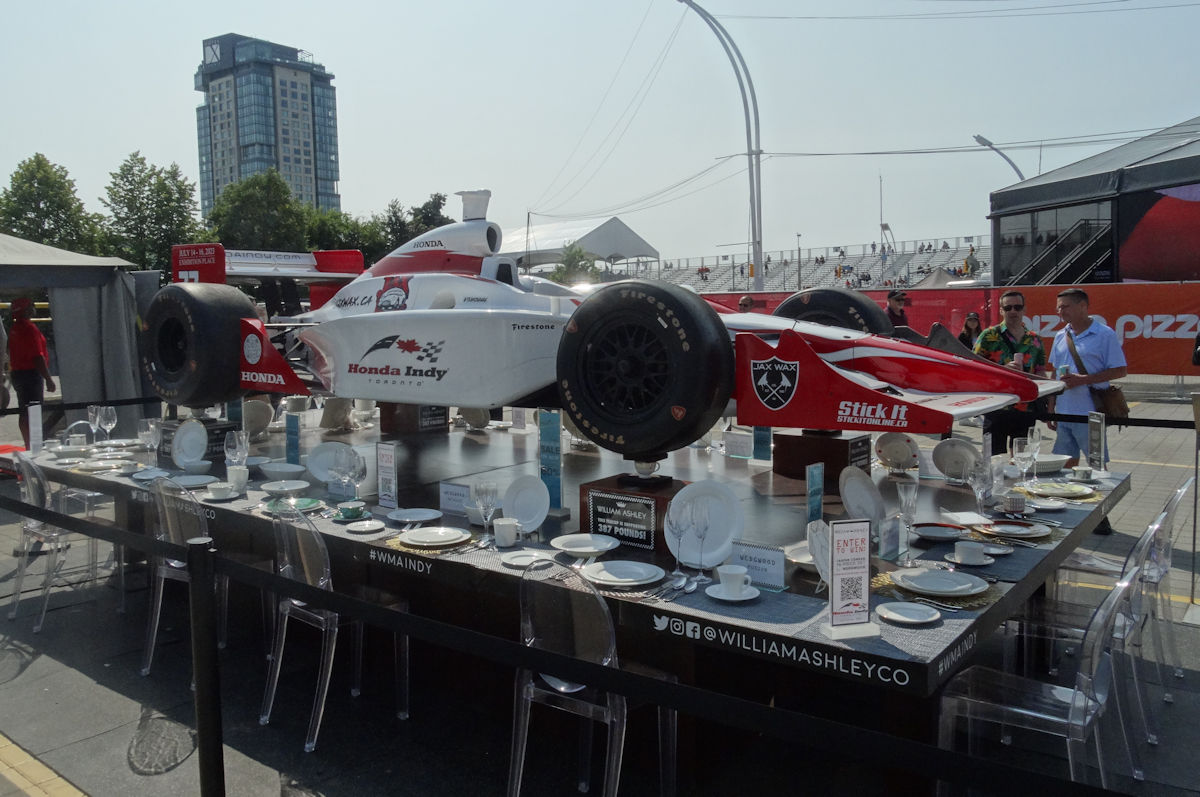
William Ashley Co Display with IndyCar at 2023 Honda Indy Toronto
Photo Credit: Chris Nagy/Car FYI Canada/XSL Speed Reporter 


On Friday September 15th, a vital meeting for the 2024 Honda Indy on the street of Toronto concluded in favour for welcoming back the headlining sounds of twin-turbocharged Honda and Chevrolet engines next summer. The Board of Governors of Exhibition Place decided to approve the application submitted by Green Savoree Toronto for a one-year license to extend the popular auto racing event. 

In the agreement, the 2024 event is tentatively slated to be held over four days starting July 18th and extends to July 21st. Billing itself as an event that generates $47 million for the economy of the Greater Toronto Area (GTA), according to report from the Chief Executive Officer of Exhibition Place Don Boyle, the Honda Indy Toronto also supports more than 450 full time jobs in the GTA. The race weekend also contributes heavily to the hospitality industry of the city accounting for over 33,000 hotel room nights between the race teams as well as race spectators with 34 percent attending from outside Toronto. During the 2023 edition of the event, more than $100,000 was raised for Make-A-Wish Canada with the total after 12 years of the partnership cresting above $1 million.

A somewhat concerning detail about this recent application is the deal only covers a single year of the Honda Indy Toronto. The previous four times when negotiating with Exhibition Place, Green Savoree Toronto sought three-year extensions for the race event. It’s unclear why the decision was made to not pursue a multi-year agreement for 2024 and beyond. The reason for requesting a one-year agreement is unclear. Financial terms for the 2024 agreement are confidential.

Since its 1986 inception, the street race within Exhibition Place had been missed on only three occasions with two (2020 and 2021) caused as a result of the COVID-19 global pandemic. The 2008 event was not held as the Champ Car open wheel racing series planned to run at the venue entered unification with the Indy Racing League/IndyCar. Along with IndyCar being the headliner, a number of additional racing series support the race weekend in Toronto including the NASCAR Pinty’s Series as well as Sports Car Championship Canada in recent years. 

With the 2024 edition of the Honda Indy Toronto passing by its approval hurtle, the schedule for the upcoming NTT IndyCar Series is slowly taking shape. Though a complete 2024 season tour has not been announced by the open wheel organization there have already been several set. Already teased by IndyCar is a season finale on the streets of Nashville for September 15th as well as $1-million to win non-points event on March 24th at California’s Thermal Club. 

Friday, December 11, 2015

NASCAR Action Returns to Streets of Toronto in 2016

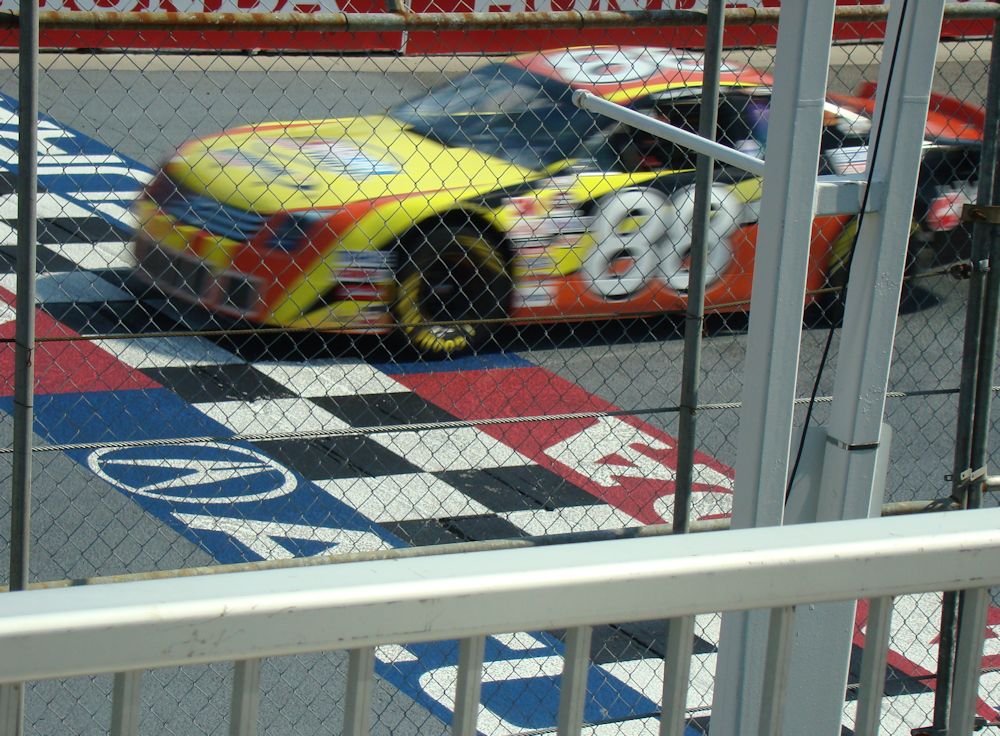
NASCAR Canadian Tire Series Stock Car Crossing Start-Finish Line
Photo Credit: Chris Nagy
The 30th anniversary edition of Toronto's popular motorsport street race will feature a few familiar touches attendees of previous events had been used to. As expected, the 2016 Honda Indy Toronto will return to its traditional mid-July date after a one-year move to June in order to accommodate the 2015 Pan-Am Games. The July 15th to 17th 2016 race weekend within the area of the Canadian National Exhibition grounds will also feature a support series that had been absent since 2011. After five years away from the streets of Toronto, Canada's top NASCAR series will once again compete as part of the summer festivities alongside the Verizon IndyCar Series.

To be known as the NASCAR Pinty's Series starting in 2016, the former NASCAR Canadian Tire Series stock cars will be a popular addition to next year's Honda Indy Toronto race schedule. The stock car racing division and the principals behind the Honda Indy Toronto will return to the event as part of a three-year appearance agreement.

The stock cars first appeared as a companion to the popular Canadian street race in 1999 when the series existed as the CASCAR Super Series. Running until 2005 under the CASCAR banner, the stock car competition was reinstated in 2010. Both CASCAR Super Series and NASCAR Canadian Tire Series events had been largely been dominated by drivers with considerable road course racing skill. Multiple winners of stock car races on the 2.824-kilometer street circuit include Kevin Dowler, Jeff Lapcevich, former Players LTD/GM Challenge Series driver Robin Buck and most recently Andrew Ranger. Ranger won both NASCAR Canadian Tire Series turns at the Honda Indy Toronto in 2010 and 2011.


Photo Credit: Matthew Manor/Getty Images for NASCAR


The announcement of stock cars returning to the Honda Indy Toronto accompanied the official word on Canada's NASCAR series' new title sponsor. Pinty's Delicious Foods Inc. will formally become the series' corporate backer starting on January 1st of next year. The full 2016 NASCAR Pinty's Series schedule will be published at a later date.

Sunday, December 6, 2015

Canadian Content Expanded for 2016 BMW Motorsports Drivers' Line-Up

Photo Credit: BMW Motorsport

BMW's auto racing program gains some additional excitement in 2016. Two all-new race-prepped versions of the BMW M6 will lead the brand's motorsport charge in the new year. IMSA's WeatherTech United SportsCar Championship competition will gain the all-new BMW M6 GTLM fieled by Team BMW RLL (Rahal Letterman Lanigan). Along with with the two-car GTLM effort, the M6 GT3 will operate in the IMSA series' GTD class as well as other GT racing series across the globe. In addition to upgraded race hardware for 2016, BMW Motorsport's world driving line-up is upgraded with presence of two established Canadian sports car racers.

Returning to the 2016 BMW Motorsport team line-up is 2012 DTM Champion Bruno Spengler. French born, Spengler actively campaigns as a Canadian driver after his family moved to Quebec when he was three years old. A competitor in DTM since 2005, he renews with the German automaker's motorsport effort for a fifth consecutive season in the series. In addition to DTM competition, Bruno Spengler's name will be seen on the side of new BMW M6 GTLM at the Rolex 24 at Daytona. A return trip for the 32-year-old driver called "The Secret Canadian", Spengler finished second with Team BMW RLL in class last year.    


Photo Credit: BMW Motorsport

Alongside Bruno Spengler's one-race participation in the IMSA WeatherTech United SportsCar Championship top event, Canada can patriotically cheer on Team BMW RLL new driver Kuno Wittmer. The Montreal, Quebec racer arrives in the BMW Motorsports' IMSA program after several successful seasons competing with a Dodge Viper. Part of a factory-backed SRT Motorsports in 2014, he won the inaugural GTLM category drivers' title in the United SportsCar Championship. When SRT Motorsports pulled out of IMSA sports car racing class after Wittmer's championship year, he moved to the GTD class and ran with Riley Motorsports. Driving the Dodge Viper GT3-R, Kuno Wittmer earned class victory at the Rolex 24 at Daytona alongside his four teammates.

Kuno Wittmer will be partnered with the driving line-up for one of the Team BMW RLL fielded BMW M6 GTLM for longer distance races at Daytona, Sebring and Road Atlanta.

Both Canadian drivers will be part of the 2016 Rolex 24 at Daytona scheduled for January 30th and 31st.


Wednesday, December 17, 2014

Sprint Hangs Up on Sponsoring NASCAR's Top Series Beyond 2016

Photo Credit: Jerry Markland/Getty Images


At the start of the 2017 NASCAR season, the green flag for the Daytona 500 will drop inaugurating a new path for their biggest stakes tour. First and foremost, NASCAR's top series will no longer be known as the Sprint Cup Series. In a brief statement issued by NASCAR on Tuesday afternoon, it was announced cellular phone service provider Sprint would not renew their title sponsor role in the premier stock car racing series.

Citing the need to concentrate on their core business, Sprint has decided not to renew their title sponsorship commitment to NASCAR. Steve Gaffney, Sprint's vice president of marketing commented, “We are proud of our association with NASCAR’s top series but have made the decision not to extend our sponsorship beyond the next two years,”. Gaffney also stated, “We genuinely appreciate the fans, teams, drivers, tracks and media who have been so supportive and welcoming to us during these many race seasons,” adding how Sprint looks forward to fulfilling the final years of their current deal.

The series had been known as NASCAR Sprint Cup since 2008 but the original contract began in 2004 through the company Nextel. Called the Nextel Cup Series for a single season, Sprint and Nextel merged in 2005. The original ten-year naming right deal for the NASCAR series was extended at the end of the term to three additional seasons. The Nextel-Sprint arrangement replaced a long-running sponsorship deal with R.J. Reynolds Tobacco Company resulting in the existence of the Winston Cup Series for 33 seasons. Besides the series title sponsorship, Sprint has also been providing their brand name to the invitational event at Daytona International Speedway and the all-star race at Charlotte Motor Speedway.

The Sprint Cup Series isn't going to be the first major touring division of NASCAR to undergo a rebranding. Starting next year, Comcast's Xfinity brand will be the new title sponsor in the NASCAR division previously known as the Nationwide Series.

Tuesday, December 16, 2014

Tequila Patron ESM Track Tests New HPD ARX-04b Prototype Sports Car


The Tequila Patron ESM (Extreme Speed Motorsports) team opened one of their Christmas gifts early this week. Waiting for their newest speed machine since May, the drivers for Tequila Patron ESM turned their first laps in an all-new Honda prototype race car in preparation for the 2015 FIA World Endurance Championship.

Received by the race team operated by Scott Sharp (a long-time American sports car racing driver as well as a co-champion for the 1996 Indy Racing League drivers’ title), the first of two all-new Honda Performance Development (HPD) ARX-04b prototype coupes was acquainted with an unidentified race track. Team Principal and Tequila Patron ESM squad’s co-driver Sharp was first to take the new vehicle out on track. “This HPS Coupe is very exciting for us, there has been so much anticipation building up to our first laps”, said Scott Sharp as he ran some initial shakedown laps. An early test of the ARX-04b, HPD prototype project leader Allen Miller slated, " Our goal today was simply to check all the systems to ensure the ARX-04b is where it needs to be, as we start our pre-season test program."

A vehicle fully compliant with ACO LMP2 rules, HPD’s new ARX-04b is powered by a twin-turbocharged version of a production-based V-6 engine. The drive-by-wire powerplant is similar to the one used on the Honda Accord as well as Acura products such as the MDX and the new TLX. The new Honda Performance Development vehicle is quickly identified for its closed cockpit setup. All the previous versions of the ARX line were open cockpit vehicles. In the 1990s, an Acura NSX-engined prototype race car ran in the GTP Lights category with an enclosed-cockpit setup. Under the Comptech Racing banner, the Honda powered prototype used a Spice chassis.


Running full-time as part of the FIA WEC tour in 2015 in the LMP2 category, the first active field-test of the HPD ARX-04b in competition will take place in the Rolex 24 at Daytona. Additionally, Tequila Patron ESM was pledged to battle for the 2015 Tudor United SportsCar Championship’s Tequila Patron North American Endurance Cup. The four-race competition for the North American Endurance Cup is shaped by the 24-hour race at Daytona International Speedway, the Mobil 1 Twelve Hours of Sebring, Sahlen’s Six Hours at the Glen and the Petit Le Mans at Road Atlanta.

Tequila Patron ESM have been rapidly acquainting themselves to the FIA WEC after years involved in the American Le Mans Series Participating in three races in the LMP2 category this past season, the team posted a runner-up spot running the Shanghai FIA WEC round. The 2015 season will be Tequila Patron ESM’s sixth year of sports car racing competition.

Sunday, November 16, 2014

600-Horsepower Cadillac ATS-V Coupe to Go Sports Car Racing in 2015


For much of its 111-year history, American luxury car brand Cadillac has been focused on the road-going character of the premium brand. While other automakers like Bentley, BMW, Audi, Jaguar and Mercedes-Benz used motorsports to highlight their latest engineering know-how documented with storied wins at tracks like Le Mans and the Indianapolis Motor Speedway, Cadillac's past has seen the General Motors' brand more accustomed to cruising boulevards or parked at country clubs. Several seasons of Pirelli World Challenge has resulted in four drivers' championships over a decade-long timeframe including Cadillac pilot Johnny O'Connell's 2014 title. With the completion of the recent season, Cadillac also locked up its three-straight manufacturers' title thanks to its V-8 powered, race-prepped CTS-V Coupes. Fending off exotic vehicle like the Bentley Continental GT3, Lamborghini GT3, McLaren 12C GT3 and the Audi R8 Ultra through 2014, Cadillac will attempt to continue its reign in sports car competition with an brand-new car in 2015.

Designated at the Cadillac ATS-V.R, the future track terror is delivering a number of advances over the previous championship winner. The first notable change is the adaptation of the ATS-V Coupe rather than the CTS model. Originally fielding the CTS sedan in 2004, Team Cadillac has been fielding a CTS-V Coupe from 2012 up to this season. Set to be revealed at the Los Angeles Auto Show, the yet-to-be shown stock 2016 ATS-V Coupe will be the brand's first compact performance model.


Another aspect affecting the look of the appearance of the 2015 ATS-V.R is that the race car conforms for FIA GT3 rules. The FIA GT3 specifications were approved for the 2013 Pirelli World Challenge season and is widely-applied in global motorsports. An aggressive aero kit consisting of a carbon fiber front splitter and a full undertray give the Cadillac ATS-V.R a firm sports car look. Fenders have also been shaped to allow FIA-mandated tire sizes that will be mounted to the Cadillac race car's 18-inch BBS racing wheels. Brembo brakes and three-way Penske adjustable shocks are fitted to ATS-V.R in order to handle fast, tight cornering.

Moving the brand-new Cadillac is handled by a dramatically different type of engine. The ATS-V.R will be the first recent competition Cadillac to be powered by a V-6 engine. Modified for racing, the 3.6-liter Twin Turbo V-6 powerplant is based on a production Cadillac engine like the one found under the hood of the CTS Vsport. This engine should also be similar to the one equipped on the stock ATS-V. Larger BorgWarner turbochargers and high-capacity intercoolers as well as a side-exiting racing exhaust system will allow an available output of 600 horsepower to flow through a rear-mounted Xtrac sequential six-speed transmission to the drive wheels.


Cadillac's racing history may not be as rich as other premium car companies but it does contain some notable accomplishments. During an 1909 event in Portland, Oregon for what was the first race to be sanctioned by the AAA (the United States automotive club held many major auto races prior to the formation of the USAC series), A Cadillac won a three-lap event on a 14.6-mile road course. After World War Two, competitive sports car builder Briggs Cunningham competed with Cadillac products. At the 1950 24 Hours of Le Mans, he ran a largely stock Cadillac Series 62 as well as a custom-bodied Cadillac chassis called "Le Monstre". In the same year, a Cadillac-engine Allard race car won 99-mile race in Watkins Glen. Aside from sports car racing in the 1950s, Cadillac's ran in the NASCAR Grand National Series (now called the Sprint Cup Series) though never won a race. Cadillac's arrival to the Pirelli World Challenge Series in 2004 came after a three-year prototype sports car run that yielded limited success.   

Along with its expected run as part of the Pirelli World Challenge in 2015, the Cadillac ATS-V.R's compliance to FIA GT3 regulations could allow the luxury brand to spread its sport car racing profile in the future.


Information and photo source: General Motors

Monday, November 3, 2014

An Account of Greg Moore's Enduring Racing Spirit 15 Years After His Death


Through the week leading up to the unpleasant anniversary, it has been my intention to create a tribute to Greg Moore. That lap 10 crash on October 31st of 1999 at the track now known as Auto Club Speedway remains as perhaps the most vicious accidents I have ever witnessed in motorsports. From what I saw to a racer I had so greatly admired, reacquainting me with the life of the Canadian presents a drastically greater feeling. I’ve retrieved my November 1st 1999 copies of the Toronto Sun, Toronto Star and the sports section of the Toronto Star newspapers I saved for 15 years to refresh myself to the great sense of loss no only to the motorsport community as well as to the nation of Canada. Crash images on the papers of those 15-year-old periodicals send me back. Reaction from teammate Patrick Carpentier, figures of the sport including CART president Andrew Craig and even insinuation whether he must have driven in the event following a Saturday scooter accident that injured his right hand was a sample of the content in text.

Following the time I spent reinforcing my memory, what I would write needed to relay a sense of sadness but also admiration. Too many of my recent articles have been a documentation of facts and the reference of statistics. Those who have followed Moore are quite famous with five great wins in the CART World Series and a domination of the 1995 Indy Lights series that built his legacy. In tribute to this great Canadian driver, I cannot liken Greg Moore to what could be found in a record book or on a digital webpage like Wikipedia.

For me, it is easier to identify with those more factual encounters than principles used in more emotional writing styles. I was born with Autism and though I can now operate at a fully functional level, it still hard for me to clearly and fully express my more emotionally guided words. That was one of many personality aspects I liked about Greg Moore. For a person who left the planet so prematurely, he conveyed happiness, humour and sometimes even displeasure so vividly to even distant observers. In his passing, his character in the paddock was well documented as a practical joker who was still an overall likeable competitor. Even 15 years later, many drivers who have raced against Moore remember him fondly.

To the best of my recollection, there was an interview with Greg Moore I watched on CBC during the 1995 Vancouver Indy where he was being questioned on assuming the Player's-sponsored ride with Forsythe Racing. Effectively taking over the spot left vacant by the Formula 1-bound Jacques Villeneuve, he was clearly thrilled but I also sense a slight bit of rookie discomfort. After-all, a Player's Racing race car found in victory lane in Indianapolis 500 and eventually running well enough to capture the 1995 CART championship would obviously felt like a one-ton weight for a 21-year-old Canadian expecting to face some of the world‘s best open wheel drivers. However, in the 1996 season, the steering wheel of the #99 car was handled by driver full of talent and near fearlessness. The opening lap multiple-car wreck at the 1996 U.S. 500 at Michigan International Speedway dodged by Moore demonstrated the reflexes of a winner. Through the infield grass, the #99 Reynard-Mercedes escaped a moving wall of open wheel race cars. Running on dirt and grass on slick tires and returning to the oval’s paved surface unscathed, that driver from Maple Ridge, British Columbia forged his place in open wheel racing.  


Winless in 1996 and falling short to locking-up rookie of the year honours in the series to a flamboyant Italian named Alex Zanardi, Moore pulled off two wins in 1997. The first coming at Milwaukee, I remembered the popular #6 machine piloted by Michael Andretti hounding the Canadian prepared to capitalize on even a minor slip. The veteran Newman/Haas Racing driver was never offered this window of opportunity. Becoming the youngest driver in CART series racing to win an event, Moore found victory lane again at Detroit. One of my two favourite Greg Moore wins, PacWest Racing team drivers Mark Blundell and Mauricio Gugelmin were gambling on fuel mileage in the closing laps of the race. Moore was positioned in third and immediately entered into full attack mode as the fuel cells of both PacWest drivers ran dry. The 1998 U.S. 500 final-lap battle between him and the Target Chip Ganassi Racing juggernaut where the Player's Racing #99 prevailed was a remarkable sight. Earlier that year, Moore stole victory away from Ganassi’s driver Alex Zanardi with five laps to go at the Rio 400 in Brazil.

The way he fought for each and every first-place trophy in CART has presented five memorable viewing experiences for which my eyes had the privilege to behold. Present at the Molson Indy Toronto event for 1998 and 1999, I was watched the #99 car in action on the long-running street course. Unfortunately, I never had the thrill to see him outside of a race car in person. Unlike the configuration used in the present Honda Indy events in Toronto where a stretch provides a reasonable chance for many spectators to see the major personalities of IndyCar racing, sight of drivers were more restricted in the late 1990s. Current IndyCar driver James Hinchcliffe has had fond memories of Greg Moore and it has been an enjoyment hearing his interaction with the Maple Ridge native. He talked about Moore in an interview I conducted back in 2010 in cooperation with his Indy Lights ride of the time Team Moore Racing. Earlier that year, I did have an experience with one of his race cars at the Canadian International AutoShow as part of a special display. Present for media day, I observed the Player's #99 Reynard-Mercedes was among several vehicles that included a Wolf Racing Formula 1 car and a Paul Tracy driven Can-Am car displayed by the Canadian Motorsports Hall of Fame.


Greg Moore’s passing affected everyone who knew him. Family and personal friends have probably been the most hurt following the tragedy in California. To a lesser degree, his discontinued physical presence on this planet resulted in him being unable to join Team Penske in 2000. Thanks to a wonderfully compiled book titled “Greg Moore- A Legacy of Spirit“, there was a wonderful account alleviating some of the sadness for the unfulfilled opportunity. While he never drove a Team Penske vehicle in competition, Moore tested Al Unser Jr.’s ride in 1994 at Nazareth Speedway one-mile track. Driving the envied Mercedes-Benz powered PC-23 chassis, he was only the second person to drive Penske machine not under contract with the “Captain“; the other driver was Formula 1 great Ayrton Senna (an idolized athlete of Moore‘s). For any Canadian auto racing fan, I have to recommend Greg Moore- A Legacy of Spirit as a deserving read for a full understanding of a driver and human being.

The most fundamental fact one person could admire about Greg Moore was his pursue to live his dream. Between his two dreams, Greg chose auto racing over his other dream of hockey. Two vocations with a slight chance for ultimate success, Greg Moore, supported by his father Ric, pressed into motorsports. Despite reaching the glorious realm of professional auto racing and flourishing, the construction of something like his dreams was not without its adversity. In the case of Moore’s family, mortgages on property paid for the younger Greg’s first season competing in Indy Lights. Despite limited finances, determination, skill and perhaps a good deal of luck resulted in Moore’s blue and white #99 car being an icon to Canada’s auto racing heritage as much as the #99 worn by Wayne Gretzky (a hero of Greg Moore) was to hockey.

With 15 years passing since the loss, we are all left wanting more time for Greg Moore on this Earth to evolve greater as a driver and person. Understanding he cannot truly achieve this wish, the young Canadian must be racing somewhere whether in the afterlife or in the spirits of those among the living.

Thursday, October 16, 2014

Braver Camry Face Expresses Stern Toyota NASCAR Sprint Cup Car for 2015

Photo Credit: Michael L. Levitt, LAT Photo USA for Toyota Racing

With the 2014 NASCAR Sprint Cup season almost over, the Toyota teams in the series have been enduring a less than spectacular outing.  A season that looked promising during the first part of Daytona Speedweeks, the 2014 Sprint Cup effort for Toyota has been one of the least fruitful since the conclusion of the manufacturer's winless debut season in 2007. After 31 races, the collection effort of the Toyota organizations has amounted to only two wins in point-paying races. Both coming with Joe Gibbs Racing owned vehicles, the Toyota Camry found victory at Auto Club Speedway driven by Kyle Busch and at May's Talladega race when Denny Hamlin wheeled the #11 machine. While qualifying has been kinder to the 2014 Toyota Camry with seven starts at the front this season, the cars have not seen victory lane in the 21 races since Talladega.

Looking ahead to greater fortunes in next season's NASCAR Sprint Cup series, the Japanese-derived auto company has created an all-new body style intent on seeing it claim more winner trophies than 2014. Based on the production car version of the new Toyota Camry (just recently released for sale to the public), the new stock car receives a more pronounced front end. Reflecting the bolder stance of the production car, the 2015 race car also features reshaping of the quarter panels and rear portion for greater personality.  Responding to the design expertise invested in the 2015 Toyota Camry NASCAR stock car, TRD (Toyota Racing Development) president and general manager David Wilson said, “It was a challenging process balancing performance and design, but working closely with Calty Design, NASCAR and our race team partners, we were able to develop a race car that looks similar to its production counterpart -- and provide a performance upgrade on the race track.”


The 2015 Toyota Camry NASCAR Sprint Cup car will debut next season at Daytona Speedweeks receiving its first ultimate field test in the Daytona 500. With the change for 2015, Toyota becomes the first manufacturer to update a NASCAR Sprint Cup vehicle based on the so-called "Gen 6" architecture balancing brand parity with unique identity. The car will also conform to a refreshed 2015 Sprint Cup series rule package designed to lessen aerodynamic downforce and drag along with reducing engine momentum. This new Camry race car will also be the shape of Toyota's 2015 NASCAR Xfinity Series (the soon-to-be new name of the Nationwide Series).